.Obleewebsitelogo-2c8a2b5ab400740d1ec25e2370be34d3f52d9f3ffc27befc28b00de7d02de79c.png)
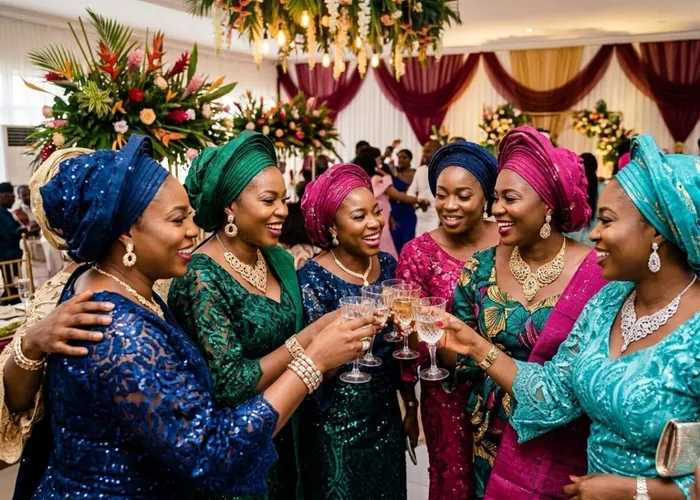
It is not the budget. It is not the venue. The thing that derails most African weddings in the UK is something nobody wants to say out loud — family.
You have been engaged for three months. You have a venue shortlisted, a colour palette chosen, and a rough guest list in your head. And then the phone calls start.
Your mother needs to invite her church. Your father's family is expecting a full traditional ceremony. Your partner's mother has opinions about the caterer. Your aunt wants to know why she was not consulted about the aso-ebi fabric. And somehow, a wedding that was supposed to be yours has become a community production with approximately forty executive producers.
This is the experience of almost every African couple planning a wedding in the UK. And it is the thing that causes more stress, more arguments, and more budget blowouts than any other single factor. So let us talk about it honestly — and more importantly, let us talk about how to manage it.
Understand Why It Happens
In Nigerian and broader African culture, a wedding is not just a celebration of two people. It is a family event, a community statement, and for many parents, a moment of pride they have been anticipating since you were born. Your parents are not trying to take over your wedding. They are expressing love in the only cultural language they know.
Understanding this does not mean accepting everything. But it does mean you can approach the conversations with patience instead of defensiveness — which will get you much further.
Set Your Non-Negotiables Early — and Stick to Them
Before any family conversation happens, sit down with your partner and agree on your absolute non-negotiables. The things that are yours and yours alone — the venue, the final guest count ceiling, the budget limit, the décor style. Write them down. These are not up for negotiation, and you both need to be aligned and firm before anyone else enters the conversation.
Everything outside your non-negotiables can be a conversation. Everything inside them is decided.
"Decide what is yours before you let anyone else have opinions about it."
The Guest List Is Your Biggest Battleground — Win It Early
Nigerian parents have a unique gift for finding people who absolutely must be invited. Distant relatives you have never met. Church members whose names you cannot pronounce. Business associates who have nothing to do with your relationship. Left unchecked, a guest list of 150 becomes 350 — and suddenly your intimate wedding is an event with a catering bill that makes your eyes water.
The way to handle this is a fixed number agreed with both families upfront. Not a suggested number. A fixed number. Each family gets an allocation. When the allocation is full, it is full. No exceptions. This conversation is uncomfortable once. The consequences of not having it are uncomfortable for six months.
Two Ceremonies — How to Plan Both Without Losing Your Mind
Most Nigerian couples in the UK plan both a traditional engagement ceremony and a white wedding. This doubles the planning, the budget, the family involvement, and the stress — but it also doubles the celebration, which for most couples is worth it.
The key to managing both is treating them as separate projects with separate budgets, separate vendor lists, and separate timelines. Do not allow the planning of one to bleed into the other. Many couples find it helpful to plan the white wedding first, lock it down completely, and then turn their attention to the traditional ceremony.
Use a Wedding Planner — Even a Part-Time One
A wedding planner in the UK who understands Nigerian weddings is not a luxury. For African couples managing two ceremonies, large guest lists, and strong family opinions, a planner is a buffer. They become the person who delivers the difficult news. They have the vendor relationships you do not. And they have done this enough times to know what you do not know yet.
You do not need a full-service planner. Even a day-of coordinator or a planner engaged for the last three months can make a significant difference to your experience on the day itself.
Give Family Members Jobs
One of the most underused strategies for managing family involvement is giving people roles. The aunt with strong opinions about décor? Make her the unofficial décor consultant — show her two options you are both happy with and let her choose between them. The family member who keeps asking about the food? Put them in charge of liaising with the caterer on dietary requirements.
People who feel involved are easier to manage than people who feel excluded. Give them ownership of something real but contained, and you will find the unsolicited opinions about everything else reduce significantly.
"The weddings that go smoothly are not the ones with no family involvement. They are the ones where the family involvement was managed with intention."
Planning an African wedding in the UK is one of the most complex, most beautiful, most overwhelming things you will ever do. But it does not have to break you. Go in with a plan, hold your boundaries with kindness, and remember that at the end of it all — the room full of people you love, the music, the food, the celebration — that is yours. You just have to get there first.
Let Oblee handle the equipment so you can focus on everything else.